
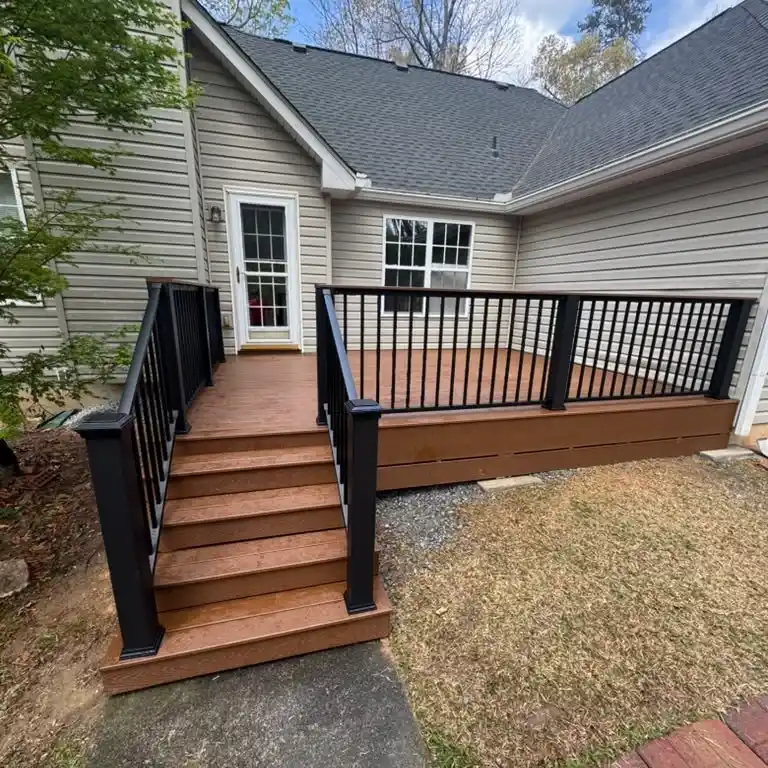
If you want to protect decks from weather damage and moisture in Monroe, GA, four habits do most of the work. Coat the wood with a penetrating water-repellent finish about once a year. Keep rain draining off the boards instead of pooling on them. Keep air moving under and around the frame. And wash mildew off before it spreads. Follow that routine consistently and a wood deck can stay sound for decades. These are the same habits our home renovation services in Monroe, GA bring to every deck we protect.
Moisture never rests in our part of Georgia, so deck care cannot either. Below, we explain what humidity, thunderstorms, and sun actually do to deck wood, then lay out the schedule we use on real jobs. We have built, repaired, and refinished deck services across Walton County for years at Rivas Renovations, and every step in this guide comes straight from that work.
Why Our Climate Is Hard on Wood Decks
Monroe sits in Georgia’s humid subtropical zone. Summer dew, pop-up thunderstorms, and shade from mature oaks keep deck boards damp for days at a time. Research from the USDA Forest Products Laboratory notes that warm, humid climates like the South’s encourage mildew, moss, and lichen growth on exterior wood, and those same conditions invite decay.
Fungi also love our temperatures. The Oregon State University Extension wood preservation manual reports that decay fungi grow best between 70 and 90°F, exactly the range Monroe decks sit in from May through September. Even dry stretches don’t help much. Monitoring published by Drought.gov for the Monroe area showed 2026 rainfall running roughly five inches below normal through August, yet morning humidity and sudden downpours still soak unprotected wood over and over.
What Water Actually Does to Deck Boards
The same federal researchers open their report with a blunt fact: water is one of wood’s worst enemies. Wet boards swell, then shrink as they dry. Repeated swelling and shrinking checks the surface, splits the grain, and loosens fasteners. Those open checks then funnel in even more water.
Rot is the deeper threat. Decay fungi cannot attack dry wood, but wood above roughly 30 percent moisture content is prime territory for them, according to the extension manual. Worse, brown rot can weaken a board long before you see anything obvious. Keeping water out is not cosmetic. It is structural.
Residential Renovation Services Monroe GA: A Yearly Protection System That Works
A penetrating water-repellent finish blocks liquid water from entering the pores while letting the wood breathe. Pick one with a mildewcide built in. Testing by the USDA Forest Products Laboratory found these finishes last about one year on fully exposed surfaces, so plan to reapply annually. Wash the deck first, let the boards dry for several days, then apply the finish on a dry, mild morning. Brushing works the finish into the grain better than spraying does.
Keep Water Moving Off and Away From the Deck
Finishes are only half the defense. Drainage is the other half.
- Keep the small gaps between boards clear of leaves, pollen, and pebbles.
- Aim downspouts and gutter splash away from the frame and posts.
- Check the flashing where the deck installation meets the house. That joint is where hidden rot usually begins.
- Trim shrubs so wet limbs are not resting on the rails.
In our experience, planters, outdoor rugs, and leaf piles cause more hidden moisture trouble than rain does. Lift them regularly and let the boards breathe.
Wash Mildew Off Before It Takes Hold
Black or gray speckles mean mildew has moved in. A mix of one-third cup household detergent, one quart of 5% household bleach, and three quarts of warm water removes it. Scrub with a stiff bristle brush, rinse well, and let the wood dry a day or two before resealing.
Bonus Tip: Never mix bleach with ammonia. The combination creates a toxic gas, a warning the federal finishing researchers repeat in every cleaning recipe they publish.
A Simple Yearly Schedule for Monroe Decks
| Task | Frequency | Why It Matters |
|---|---|---|
| Sweep gaps, corners, and under-planters clear | Every few weeks in pollen season and fall | Trapped debris holds dampness against the wood |
| Wash off mildew film | Each spring, again in late summer if spots return | Mildew spreads fast in shade and raises the wood’s water absorption |
| Reapply water-repellent finish | Once a year | The coating wears off exposed boards in about 12 months |
| Inspect board ends, joints, and fasteners | Spring and fall | End grain and screw holes are the first entry points for water |
| Clear under-deck airflow | As plants grow each season | Moving air dries wet boards between storms |
Things to Consider Before Making a Decision
Before you choose a protection plan, weigh these factors:
- Wood type and treatment. Pressure-treated southern yellow pine dominates Georgia decks. The preservative inside fights rot, but it does not stop water from soaking into the surface, so it still needs a repellent coating.
- Sun and shade. Full-sun decks burn through finishes faster, while shaded decks grow mildew faster. Your exposure decides where to focus.
- Age of the structure. A deck older than ten years deserves a close look at joists, the ledger, and footings before surface work begins.
- Your upkeep commitment. Annual refinishing is the honest price of protection. If you cannot commit to it, a standing service schedule makes sense.
- Severity of existing damage. Soft spots, deep splits, or wobbly rail posts call for repairs first and sealing second.
Get Help From a Home Renovation Contractor in Monroe, GA to Protect Your Deck
Moisture problems are far easier to prevent than to repair, and the mild seasons are the smart time to act. If your Monroe deck needs an inspection, a deep clean, a fresh protective finish, or repairs beyond your toolset, Rivas Renovations is ready to help. As a home renovation contractor in Monroe, GA, our crew handles deck protection and restoration throughout Walton County. Call us at (470) 875-8102 or email rivasrenovationsinc@gmail.com to schedule a walkthrough and get a clear plan to keep your deck dry for years.
Frequently Asked Deck Protection Questions
Does pressure-treated lumber really need a water repellent?
Yes. Treatment chemicals defend against decay and insects, but they do little to block surface water absorption or mildew, so the boards still swell, crack, and gray out without a finish.
How long does one coat last in Georgia?
Expect about a year on horizontal, sun-exposed surfaces. Shaded railings often hold up longer. Sprinkle water on the boards; if it soaks in dark instead of beading, it is time to reseal.
When is the best time to seal a deck in Monroe?
Pick a dry stretch in spring or fall with mild temperatures. The wood must be clean and dry for several days first, and finishes cure poorly in cold weather, so follow the label’s temperature range.
What are the early signs of moisture damage?
Look for small surface checks and splinters, dark mildew speckles, staining around fasteners, and boards that stay damp long after rain. Decay can weaken wood before it looks bad.
Can a badly weathered deck be saved?
Often, yes. A wood brightener or oxalic acid solution can pull some original color back into gray boards. If a deck has gone unfinished for years, though, some surface fibers may never fully recover.
Sources
- USDA Forest Products Laboratory – Federal research report, “Water Repellents and Water-Repellent Preservatives for Wood,”.
- Oregon State University Extension – Extension training manual on wood preservation, revised from a University of Georgia publication.
- Drought.gov – NOAA’s National Integrated Drought Information System page for Monroe, GA (Walton County), providing local precipitation conditions compared to 30-year normals.